Neuro-ophthalmology · Eye Health Answers
Neuro-ophthalmology: double vision, optic nerve disease and visual loss
Neuro-ophthalmology covers problems of the nerves and pathways that carry vision and control eye movement. Some of these symptoms are warning signs of a serious neurological condition, so this section is clear about what needs urgent assessment.
Why these symptoms are taken seriously
Vision depends not only on the eye but on the optic nerve and the pathways that carry signals to the brain, and eye movement depends on nerves running through the skull. A change in vision or in eye movement can therefore be the first sign of a problem outside the eye, including raised pressure in the head, inflammation, a blood supply problem or a stroke.
This does not mean every symptom is dangerous. Many causes are benign and treatable. It does mean that certain combinations, particularly sudden onset symptoms or symptoms with headache, weakness or slurred speech, need assessment straight away rather than a routine appointment.
What an assessment involves
- Vision, colour vision and pupil reactions, which give direct information about the optic nerve
- Eye movements and alignment in all directions of gaze
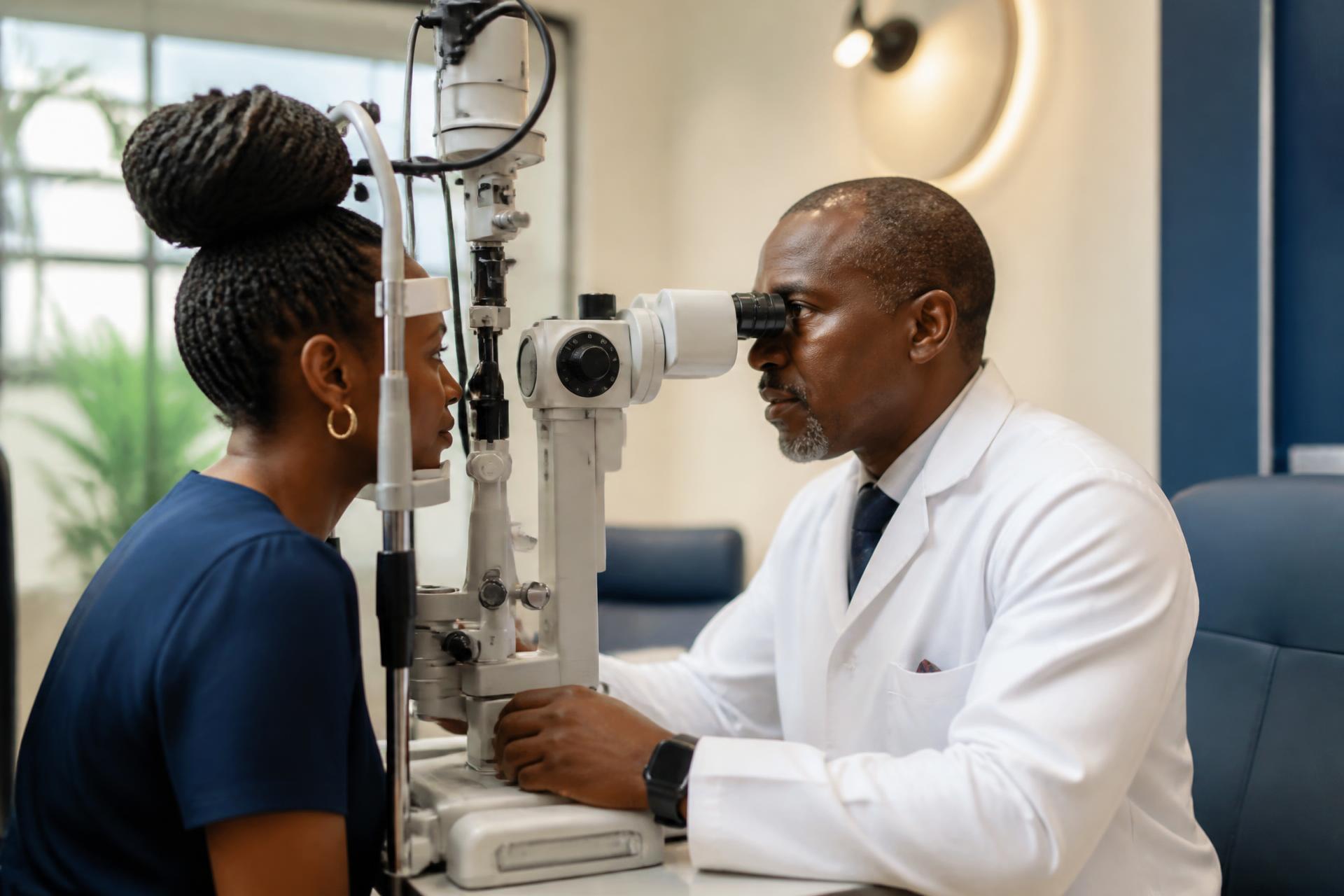
- Examination of the optic discs after dilation, looking for swelling or pallor
- Visual field testing to map where vision is missing
- Optical coherence tomography of the optic nerve where indicated
- Blood pressure and general medical review, and referral for brain imaging or neurological assessment when required
Working with other specialists
Many of these conditions are managed jointly. Standard Eye Specialist Hospital carries out the ophthalmic assessment, including visual fields, optic nerve imaging and dilated examination, and where scans or neurological or physician care are needed these are arranged with the appropriate service.
Frequently asked questions
- Can an eye examination detect a brain problem?
- Sometimes. The optic disc is the only part of the nervous system visible directly, so swelling or pallor there, along with pupil and field findings, can point to a problem inside the head that needs a scan.
- Do I need a brain scan for every case of double vision?
- No. The need for imaging depends on the pattern, how it started, your age and other symptoms. Your ophthalmologist will explain whether a scan is needed in your case.
Would you like a neuro-ophthalmology assessment?
Request a specialist assessment at our hospital in Garki, Abuja.
Answers in this topic
Common neuro-ophthalmology questions
Choose the question closest to yours.
What causes double vision?
Double vision means seeing two images of one object.
Read the answerWhat is optic neuritis?
Optic neuritis is inflammation of the optic nerve.
Read the answerWhat does it mean if my optic nerve is damaged?
The optic nerve carries all visual information from the eye to the brain, so damage to it reduces vision, colour perception and contrast even when the eye itself looks healthy.
Read the answerWhat is papilloedema?
Papilloedema is swelling of both optic discs caused by raised pressure inside the head.
Read the answerWhat if my vision is poor but my eyes look normal?
When vision is reduced and glasses do not help although the eye appears healthy, the problem usually lies behind the eye, in the optic nerve or the visual pathways to the brain.
Read the answerWhat does loss of side vision mean?
Loss of side vision means part of your field of view is missing, even though you may still read normally.
Read the answerAre my headaches caused by my eyes?
Some headaches are related to the eyes, most often from an uncorrected glasses prescription, prolonged close work or a squint that the eyes are working hard to control.
Read the answer